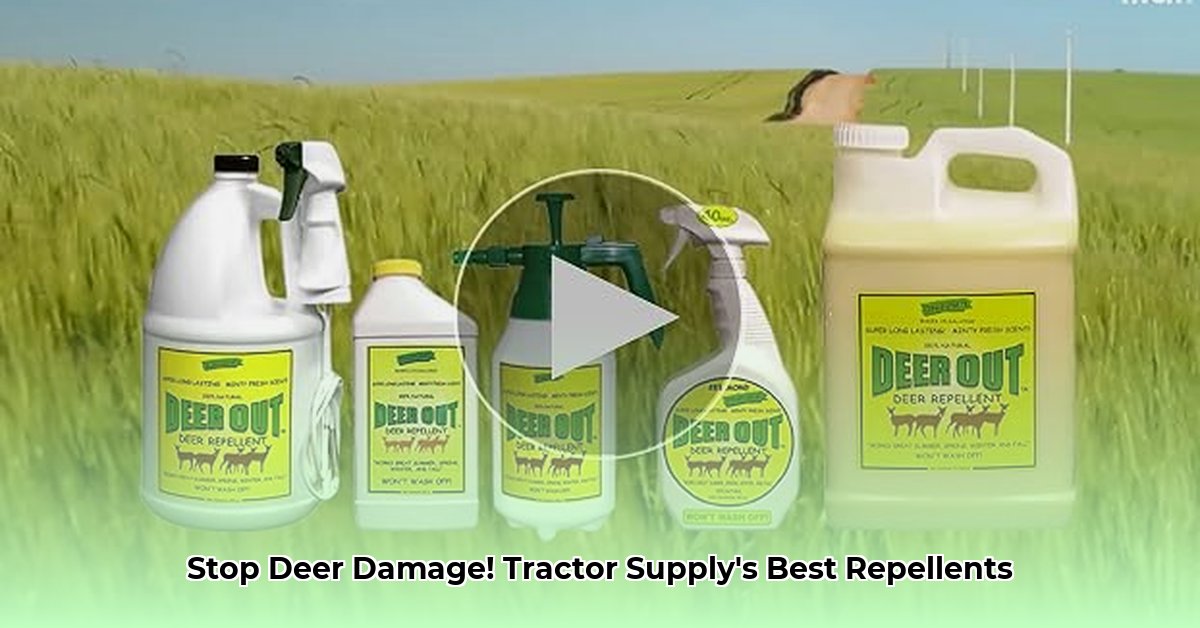
Protecting your garden from deer damage can be a frustrating challenge. These seemingly gentle creatures can quickly decimate your crops, leaving you with empty rows and a hefty bill for replacements. Tractor Supply offers a variety of deer repellents, but choosing the right one for your specific situation requires understanding deer behavior and available options. This guide will help you navigate the choices, combining chemical and non-chemical strategies for the most effective, long-term pest control. For similar pest control, check out options for armadillo repellent.
Understanding Deer Behavior and Damage
Deer are crepuscular animals, most active at dawn and dusk. Their diet consists primarily of tender young plants, making your garden a tempting buffet. They're particularly fond of vegetables like lettuce and beans, as well as many flowers and shrubs. The damage ranges from nibbled leaves to complete destruction of plants. Understanding their feeding habits is crucial for effective repellent selection. Have you noticed certain plants are more heavily targeted? This often points to a deer's preferences that need addressing.
Deer Repellent Options from Tractor Supply
Tractor Supply offers several deer repellent categories: spray, granular, and scent-based. Let's examine each:
Spray-On Repellents
These repellents typically utilize strong, unpleasant scents to deter deer. They are easy to apply directly to plants, but rain washes them away, necessitating frequent reapplication.
- Pros: Easy application, relatively inexpensive.
- Cons: Requires frequent reapplication (reducing long-term cost-effectiveness), effectiveness varies depending on weather conditions, limited scientific data supporting long-term efficacy, potential environmental impact with repeated use.
Granular Repellents
These come in a granular form, similar to fertilizer, and are scattered around plants. The scent or taste is intended to discourage deer.
- Pros: Can last longer than sprays, potentially reducing application frequency.
- Cons: Effectiveness varies, potentially messy application, lack of comprehensive scientific data regarding efficacy, potential environmental impact.
Scent-Based Repellents
These repellents, often containing predator urine or strong-smelling natural ingredients, exploit deer’s sensitive sense of smell. Application methods vary.
- Pros: Offers a potentially more "natural" approach compared to solely chemical repellents.
- Cons: Effectiveness is highly variable and unpredictable; wind and rain can easily dissipate the scent. Deer may habituate to certain scents over time, rendering them ineffective.
Important Note: No deer repellent guarantees 100% effectiveness. Manufacturers' claims often lack robust scientific support. Efficacy varies greatly depending on deer population density, weather, and plant types. Are you considering the long-term cost-effectiveness of different approaches? This is critical in selecting the best strategy.
Beyond Chemical Repellents: Integrated Pest Management (IPM)
An Integrated Pest Management (IPM) strategy uses multiple methods for more sustainable and effective deer control. This holistic approach reduces reliance on chemicals and enhances long-term cost savings.
- Fencing: A sturdy fence is the most reliable physical barrier. Height and material strength are crucial considerations to deter determined deer.
- Netting: Protects individual plants or small areas.
- Sonic Devices: These emit high-frequency sounds designed to repel deer, though effectiveness is debated.
- Companion Planting: Planting deer-resistant plants near vulnerable ones can act as a natural deterrent. Research plants suitable for your region.
Choosing the Right Repellent
Selecting the appropriate repellent depends on several factors:
- Plant Type: Some plants are more attractive to deer than others.
- Deer Pressure: The number of deer in your area impacts the aggressiveness of your approach.
- Budget: Fencing is a higher initial investment but often provides long-term cost savings.
- Environmental Concerns: Consider the environmental impact of chemical repellents compared to non-chemical options.
A combined IPM strategy typically yields the best results. Remember, an integrated approach will also improve your long-term cost-effectiveness.
Safety Precautions
Always follow manufacturer instructions carefully when using chemical repellents. Store and dispose of them properly, keeping them out of reach of children and pets.
Conclusion
Effective deer control requires a multi-faceted approach. While Tractor Supply provides a range of repellents, success relies on understanding deer behavior and selecting appropriate methods, including those beyond chemical solutions, to achieve long-term, cost-effective solutions. Prioritizing an Integrated Pest Management (IPM) strategy, balancing chemical and non-chemical deterrents, will yield the best outcomes for your garden and the environment.